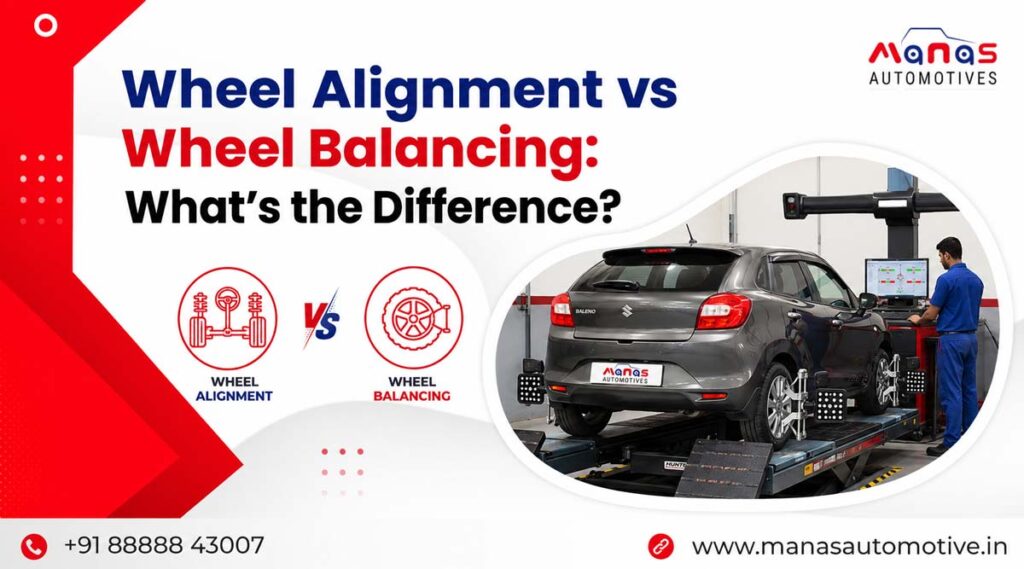
Many vehicle owners assume wheel alignment and wheel balancing are the same service. In reality, they solve two completely different problems, yet both play a crucial role in your vehicle’s safety, handling, tyre life, and fuel efficiency.
It’s common for drivers to notice symptoms like steering wheel vibrations, uneven tyre wear, or a car pulling to one side and assume that replacing the tyres will solve the problem. However, these issues are often related to improper wheel alignment or unbalanced wheels rather than the tyres themselves.
Ignoring these early warning signs can gradually affect suspension components, increase fuel consumption, reduce driving comfort, and shorten tyre life. More importantly, poor alignment or balancing can compromise vehicle stability, especially when driving at highway speeds or during emergency braking.
If you’re looking for wheel alignment in Pune, wheel balancing in Pune, car service in Pune, or an Authorised Maruti Suzuki Service Centre in Pune, understanding these two services will help you make better maintenance decisions and avoid unnecessary repair costs.
In this guide, you’ll learn how wheel alignment and wheel balancing differ, why both services are important, when they should be performed, and how regular inspections contribute to safer and more economical driving.
Wheel alignment adjusts the angles of your wheels so they are correctly positioned according to the manufacturer’s specifications. Proper alignment improves steering control, tyre life, and fuel efficiency.
Wheel balancing ensures the weight of the tyre and wheel assembly is evenly distributed. Proper balancing eliminates vibrations, improves driving comfort, and reduces uneven tyre wear.
Although these services are different, they often complement each other and are frequently recommended during routine vehicle servicing.
Wheel Alignment vs Wheel Balancing: A Quick Comparison
| Feature | Wheel Alignment | Wheel Balancing |
|---|---|---|
| Purpose | Corrects wheel angles | Balances tyre and wheel weight |
| Main Benefit | Better handling and tyre life | Eliminates vibrations |
| Common Symptoms | Vehicle pulls to one side | Steering wheel vibration |
| Affects | Suspension geometry | Tyre rotation |
| Improves Fuel Efficiency | Yes | Indirectly |
| Prevents Uneven Tyre Wear | Yes | Yes |
| When Required | After suspension work, pothole impacts, uneven tyre wear | After tyre replacement, vibration, tyre repair |
While both services improve driving performance, they address different mechanical issues. In many cases, technicians recommend performing both together to maximise tyre life and overall vehicle performance.
What Is Wheel Alignment?
Wheel alignment refers to adjusting the angles of your vehicle’s wheels so they match the manufacturer’s recommended specifications. Contrary to what many people believe, wheel alignment does not involve adjusting the tyres themselves. Instead, technicians adjust the suspension components that determine how the wheels contact the road.
Modern alignment equipment measures three primary angles:
- Camber
- Caster
- Toe
These angles influence how your tyres wear, how your vehicle responds to steering inputs, and how stable it remains while driving.
Even a slight deviation from the recommended alignment can affect steering precision and gradually increase tyre wear.
For example, technicians frequently observe alignment issues in vehicles that regularly travel on uneven roads or encounter large potholes. Cities like Pune, particularly areas with heavy traffic and varying road conditions such as Karve Nagar, Kothrud, Warje, Bavdhan, Erandwane, Deccan, and Sinhagad Road, can accelerate suspension wear over time, making periodic alignment checks even more important.
Signs Your Vehicle Needs Wheel Alignment
Most alignment problems develop gradually, making them easy to overlook until tyre wear becomes visible.
Some of the most common warning signs include:
- The vehicle pulls left or right while driving on a straight road.
- The steering wheel is off-centre even when travelling straight.
- Uneven tyre wear appears on the inner or outer edges.
- Steering feels less responsive than usual.
- Reduced fuel efficiency without any obvious mechanical problem.
- The vehicle feels unstable at higher speeds.
Many drivers continue using their vehicles despite these symptoms, believing they are minor inconveniences. However, improper alignment places additional stress on tyres and suspension components, often leading to more expensive repairs later.
If you notice any of these signs, scheduling a professional inspection during your next car servicing in Pune is a practical step towards preventing further damage.
What Causes Wheel Misalignment?
Wheel alignment doesn’t suddenly change without a reason. Several everyday driving conditions can gradually alter suspension geometry.
Some of the most common causes include:
Driving Over Potholes
Sharp impacts from potholes remain one of the leading causes of wheel misalignment.
Hitting Curbs
Even a low-speed impact while parking can slightly alter wheel angles.
Worn Suspension Components
Bushings, ball joints, tie rods, and control arms naturally wear over time.
Accidents
Even minor collisions can affect alignment without causing visible body damage.
Carrying Excessive Loads
Regularly overloading the vehicle places additional stress on suspension components.
Because these changes often occur gradually, many drivers don’t realise their vehicle needs alignment until tyre wear becomes significant.
What Is Wheel Balancing?
While wheel alignment focuses on wheel angles, wheel balancing focuses on weight distribution. No tyre or wheel is perfectly balanced after manufacturing. Tiny variations in weight can create an imbalance that becomes more noticeable as driving speed increases.
Wheel balancing involves mounting the tyre and wheel assembly onto a specialised balancing machine that identifies heavy and light spots. Small balancing weights are then attached to the wheel to evenly distribute weight around the entire assembly. A properly balanced wheel rotates smoothly, reducing vibrations and improving driving comfort. Unlike wheel alignment, balancing does not alter suspension settings. Instead, it ensures the rotating assembly spins evenly at all speeds.
Signs Your Vehicle Needs Wheel Balancing
Wheel imbalance usually becomes noticeable while driving rather than through visible tyre wear.
Typical symptoms include:
- Steering wheel vibration between 60–100 km/h.
- Vibrations felt through the seats or floor.
- Uneven tyre wear despite correct alignment.
- Increased road noise.
- Reduced driving comfort at higher speeds.
Many customers searching for wheel balancing in Pune first assume they have a suspension problem because the steering wheel shakes. However, in routine servicing, technicians often find that a simple wheel balancing procedure resolves the issue completely.
What Causes Wheels to Become Unbalanced?
Wheel imbalance develops naturally over time.
Some common reasons include:
- Normal tyre wear.
- Tyre replacement.
- Wheel repairs.
- Loss of balancing weights.
- Driving over rough roads.
- Minor wheel damage.
Even a small imbalance becomes magnified at highway speeds, which is why vibrations often become more noticeable above 70 or 80 km/h.
Do You Need Both Wheel Alignment and Wheel Balancing?
This is one of the most common questions vehicle owners ask during routine servicing. The answer depends on the symptoms your vehicle is showing. If your steering wheel vibrates while driving, wheel balancing is often the first service technicians inspect.
If the vehicle drifts to one side or the tyres show uneven wear, wheel alignment is usually required. However, these issues frequently occur together. For example, after replacing tyres, technicians commonly recommend balancing all four wheels and inspecting the alignment. Similarly, after suspension repairs or significant pothole impacts, checking both alignment and balancing helps restore the vehicle’s handling and prevent premature tyre wear. Rather than treating them as interchangeable services, think of wheel alignment and wheel balancing as complementary maintenance procedures that contribute to safer driving, improved fuel efficiency, and longer tyre life.
Why Wheel Alignment and Wheel Balancing Matter
Although wheel alignment and wheel balancing are different services, they work together to improve your vehicle’s overall performance. Neglecting either one can lead to unnecessary tyre wear, reduced driving comfort, and higher maintenance costs. A vehicle with poor wheel alignment may still have perfectly balanced wheels, but it won’t drive efficiently because the tyres are not making proper contact with the road. Similarly, a vehicle with correct alignment but unbalanced wheels may still vibrate at higher speeds, making every journey less comfortable.
During routine car servicing in Pune, technicians often inspect both alignment and balancing because they directly influence how your tyres wear and how safely your vehicle handles. Identifying these issues early is far more cost-effective than replacing tyres or suspension components prematurely. If your vehicle is regularly driven through busy areas such as Karve Nagar, Kothrud, Warje, Bavdhan, Erandwane, Deccan, or Sinhagad Road, frequent braking, potholes, speed breakers, and uneven road surfaces can gradually affect both wheel alignment and wheel balance. Periodic inspections help ensure your vehicle continues to perform as intended.
Benefits of Proper Wheel Alignment
Many drivers only consider wheel alignment after noticing uneven tyre wear. In reality, regular alignment offers several long-term benefits beyond protecting your tyres.
Better Steering Control
A properly aligned vehicle responds more accurately to steering inputs. Instead of constantly correcting the steering wheel to keep the car straight, the vehicle tracks naturally, making driving more comfortable and less tiring.
Longer Tyre Life
Incorrect wheel angles cause certain areas of the tyre to wear faster than others. Over time, this uneven wear can significantly reduce tyre life. Proper alignment distributes the vehicle’s weight evenly across the tyre surface, helping tyres wear more uniformly.
Improved Fuel Efficiency
When the wheels are misaligned, the tyres create additional rolling resistance. This forces the engine to work harder, resulting in increased fuel consumption. Maintaining correct alignment is one of the simplest car maintenance tips that can help improve mileage over time.
Better Handling and Stability
Proper alignment improves vehicle stability during cornering, highway driving, and emergency manoeuvres. This becomes particularly important during monsoon conditions when maintaining maximum tyre grip is essential.
Reduced Suspension Wear
Misaligned wheels place unnecessary stress on steering and suspension components. Regular inspections help minimise wear on tie rods, ball joints, bushings, and other suspension parts.
Benefits of Proper Wheel Balancing
Wheel balancing may seem like a minor service, but it has a significant impact on driving comfort and component life.
Eliminates Steering Vibrations
The most noticeable benefit is a smoother driving experience. Balanced wheels rotate evenly, reducing steering wheel vibrations that commonly occur at higher speeds.
Protects Suspension Components
Continuous vibration transfers additional stress to suspension parts, wheel bearings, and steering components. Correct balancing helps reduce this unnecessary wear.
Improves Tyre Performance
Balanced tyres maintain better contact with the road surface, improving ride quality and ensuring tyres wear more evenly.
Enhances Driving Comfort
Whether you’re commuting within Pune or travelling on the highway, balanced wheels provide a smoother, quieter ride with less driver fatigue.
Extends Tyre Life
Uneven weight distribution causes irregular tyre wear over time. Wheel balancing helps maximise the lifespan of your tyres and delays replacement costs.
When Should You Get Wheel Alignment?
There isn’t a single fixed interval that suits every vehicle. Instead, manufacturers recommend inspecting wheel alignment whenever there are signs of uneven tyre wear or changes in steering behaviour.
You should consider getting your wheel alignment checked if:
- Your vehicle pulls to one side.
- The steering wheel is not centred.
- You notice uneven tyre wear.
- You hit a large pothole or curb.
- Suspension or steering components have been repaired.
- New tyres have been installed.
- You have been involved in a minor accident.
Even if your vehicle appears to drive normally, many automotive experts recommend checking alignment during routine servicing or at least once a year, especially if you frequently drive on rough roads.
When Should You Get Wheel Balancing?
Wheel balancing is generally recommended whenever tyres are removed from the wheels or whenever vibrations begin to appear.
Common situations include:
- Installing new tyres.
- Rotating tyres.
- Repairing a puncture.
- Replacing alloy wheels.
- Feeling steering wheel vibrations.
- After significant tyre wear.
Unlike alignment, balancing focuses on the rotating wheel assembly, so it should be checked whenever that assembly changes.
Common Myths About Wheel Alignment and Wheel Balancing
Many misconceptions prevent vehicle owners from servicing their wheels at the right time. Let’s clear up a few common myths.
Myth 1: Wheel Alignment and Wheel Balancing Are the Same
This is the most common misunderstanding. Alignment corrects wheel angles, while balancing corrects weight distribution. They solve different problems and are often performed together for the best results.
Myth 2: New Tyres Don’t Need Balancing
Every new tyre should be balanced before installation. Even brand-new tyres have slight weight variations that can cause vibrations if left unbalanced.
Myth 3: Alignment Is Only Needed After an Accident
Although collisions can affect alignment, everyday driving conditions such as potholes, speed breakers, and rough roads can gradually alter wheel angles over time.
Myth 4: Vibrations Always Mean Wheel Balancing
While wheel imbalance is a common cause of vibrations, similar symptoms can also result from worn suspension components, damaged tyres, or brake issues. Professional inspection helps identify the exact cause.
Preventive Maintenance Tips
Wheel alignment and balancing should be viewed as part of your vehicle’s overall maintenance routine rather than occasional repairs.
Here are a few simple practices that help keep your vehicle in excellent condition:
- Maintain the recommended tyre pressure.
- Rotate tyres according to the manufacturer’s schedule.
- Avoid driving through potholes whenever possible.
- Slow down over speed breakers.
- Avoid hitting curbs while parking.
- Replace worn suspension components promptly.
- Inspect tyres regularly for uneven wear.
- Schedule routine vehicle servicing.
Combining these habits with periodic inspections helps improve handling, extend tyre life, and reduce long-term maintenance costs.
Why Choose MANAS Automotive?
Maintaining correct wheel alignment and wheel balancing requires more than just specialised equipment—it also requires trained technicians who understand your vehicle’s suspension geometry and manufacturer specifications.
As an Authorised Maruti Suzuki Service Centre in Pune, MANAS Automotive offers professional wheel alignment and wheel balancing services using advanced equipment and manufacturer-recommended procedures. Every inspection is carried out by trained technicians who evaluate tyre wear patterns, steering response, suspension condition, and wheel balance before recommending any corrective work.
Beyond alignment and balancing, MANAS Automotive provides comprehensive vehicle care, including periodic servicing, engine diagnostics, brake inspections, suspension repairs, car AC repair in Pune, battery replacement, denting and painting, and genuine Maruti Suzuki spare parts. Whether you’re searching for wheel alignment in Pune, wheel balancing in Pune, car repair in Pune, or Maruti Suzuki service in Pune, timely maintenance helps keep your vehicle safe, comfortable, and performing at its best.
Frequently Asked Questions
1. What is the difference between wheel alignment and wheel balancing?
Wheel alignment adjusts the angles of the wheels so they are correctly positioned according to the manufacturer’s specifications, while wheel balancing ensures the tyre and wheel assembly has evenly distributed weight to eliminate vibrations.
2. How often should wheel alignment be checked?
It’s advisable to check wheel alignment at least once a year or whenever you notice uneven tyre wear, your vehicle pulling to one side, or after hitting a large pothole or curb.
3. When should wheel balancing be done?
Wheel balancing should be performed whenever new tyres are installed, tyres are rotated, a puncture is repaired, or steering wheel vibrations develop while driving.
4. Can improper wheel alignment reduce fuel efficiency?
Yes. Misaligned wheels increase rolling resistance, causing the engine to work harder and consume more fuel.
5. Does wheel balancing improve tyre life?
Yes. Properly balanced wheels reduce uneven tyre wear, helping tyres last longer while improving ride comfort.
6. Can I drive with poor wheel alignment?
While the vehicle may still be drivable, continuing to drive with poor alignment can accelerate tyre wear, affect handling, and place additional stress on suspension components.
7. Why does my steering wheel vibrate at highway speeds?
Steering wheel vibrations are commonly caused by wheel imbalance, although damaged tyres, suspension wear, or brake issues can produce similar symptoms.
8. Does installing new tyres require wheel alignment?
Not always, but it’s highly recommended to inspect the alignment whenever new tyres are fitted to ensure even tyre wear from the beginning.
9. Are wheel alignment and balancing included in regular servicing?
Some service packages include inspection only, while alignment and balancing are typically performed if required based on tyre wear, driving symptoms, or technician recommendations.
10. Where can I get professional wheel alignment and wheel balancing in Pune?
MANAS Automotive, an Authorised Maruti Suzuki Service Centre in Pune, offers professional wheel alignment, wheel balancing, tyre inspections, suspension checks, and complete vehicle servicing using manufacturer-recommended procedures.