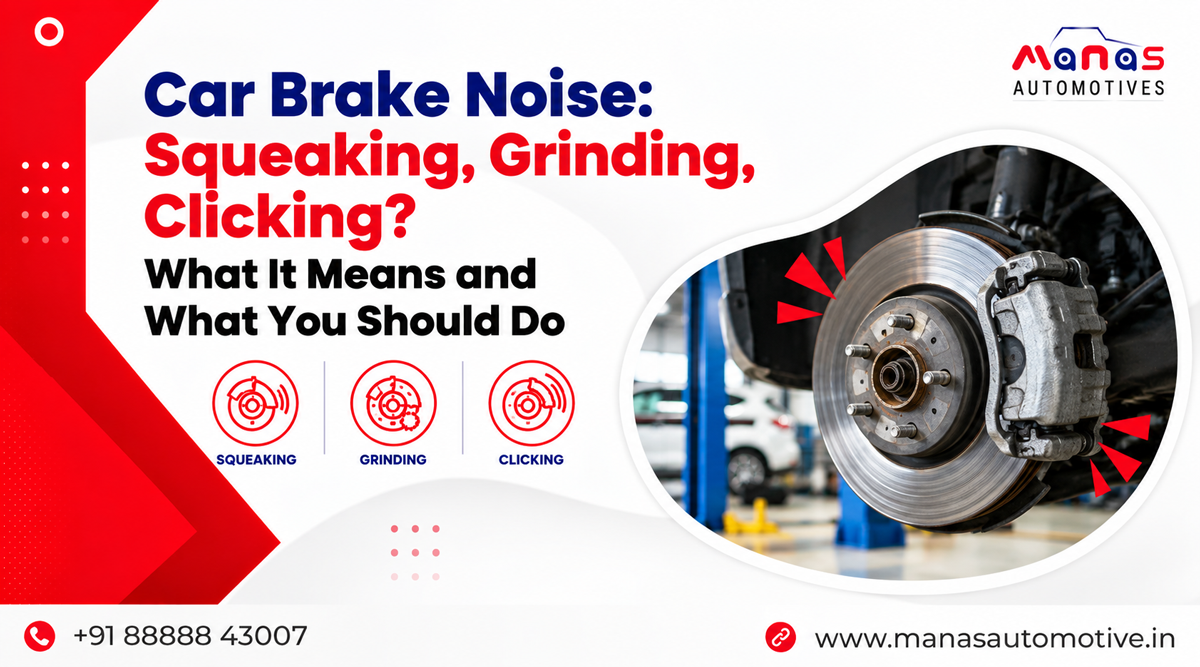
Car brake noise is often an early warning that part of the braking system needs attention. Squeaking brakes may indicate moisture, dust or brake pad wear, while a grinding brake noise can signal serious metal-to-metal contact. A clicking sound when braking may point to loose pads, worn hardware or another moving component. Because brakes directly affect vehicle safety, unusual sounds should never be ignored.
Why Is Your Car Making Noise When Braking?
A vehicle’s braking system includes brake pads, discs or rotors, callipers, drums, shoes and several smaller components. Friction allows these parts to slow the wheels, so some sound can occasionally occur.
However, persistent or increasing brake noise may indicate:
- Worn brake pads or shoes
- Dust, water or debris on braking surfaces
- Damaged brake discs or drums
- Loose or incorrectly fitted components
- Insufficient lubrication at contact points
- Overheated or glazed brake pads
- Stones or foreign objects near the brake assembly
The type of sound and when it occurs can help a technician identify the likely cause.
What Causes Squeaking Brakes?
A high-pitched squeaking or squealing sound is one of the most common brake complaints.
Moisture or Surface Rust
After rain, washing or overnight parking, a light layer of moisture or surface rust can form on the brake discs. This may cause temporary squeaking that disappears after a few brake applications.
Brake Pad Wear Indicator
Many brake pads have a wear indicator that creates a squealing sound when the friction material becomes thin. This sound signals that the pads should be inspected and may need replacement.
Dust or Debris
Brake dust, dirt or small particles can collect around the pads and discs, producing intermittent noise.
Glazed Brake Pads
Repeated hard braking or excessive heat can make the pad surface smooth and hardened. Glazed brake pads may squeak and provide less effective friction.
If squeaking brakes continue after several drives or are accompanied by reduced braking performance, arrange an inspection.
What Does Grinding Brake Noise Mean?
A harsh grinding brake noise is generally more serious than squeaking and requires immediate attention.
Completely Worn Brake Pads
When the pad material wears away, its metal backing can contact the brake disc. This creates a loud grinding sound and can damage the disc.
Damaged Brake Discs or Drums
Deep scoring, uneven wear, rust or physical damage to the brake disc or drum may create grinding or scraping sounds.
Foreign Object in the Brake Assembly
A stone or piece of road debris caught between components can produce continuous scraping, even when the brake pedal is not pressed.
Driving with grinding brakes can increase stopping distance and turn a brake pad replacement into a more expensive repair. Stop using the vehicle if braking feels weak, the car pulls to one side or the pedal behaves abnormally.
Why Is There a Clicking Sound When Braking?
A clicking sound when braking may occur when components move slightly as the brakes engage or release.
Possible causes include:
- Loose or incorrectly installed brake pads
- Damaged pad clips or retaining hardware
- Worn calliper components
- Loose wheel nuts
- Movement in suspension or steering parts
- CV joint wear when clicking occurs during turns
The source is not always the braking system. A technician may need to inspect the brakes, wheels, suspension and drivetrain to locate the exact problem.
Other Brake Sounds You Should Know
Thumping or Pulsating Noise
A repeating thump accompanied by pedal or steering vibration may indicate an uneven brake disc, irregular drum surface or tyre-related problem.
Hissing Sound
A hissing sound near the pedal may be connected to the brake booster or a vacuum leak, especially if the pedal becomes hard.
Clunking Sound
A clunk during braking can result from loose brake components, suspension movement, worn mounts or another mechanical issue.
Brake Noise Warning Signs That Need Immediate Inspection
Arrange a professional car brake inspection if you notice:
- Loud grinding or metal-on-metal sounds
- Increased stopping distance
- A soft, spongy or unusually hard brake pedal
- Steering or pedal vibration during braking
- The car pulling to one side
- A burning smell near a wheel
- Brake fluid leakage
- A brake warning light on the dashboard
- Noise becoming louder or more frequent
If braking performance is reduced, avoid driving the car and arrange professional assistance.
How Can Brake Noise Be Prevented?
Brake noise cannot always be avoided, but preventive care can reduce the risk of major damage:
- Inspect brake pads and discs during periodic servicing
- Replace worn components before they damage other parts
- Use parts that match the vehicle’s specifications
- Avoid unnecessary hard braking
- Have unusual sounds diagnosed early
- Check brake fluid according to the recommended schedule
- Ensure wheels and brake components are fitted correctly
Never apply ordinary oil or grease to braking surfaces. Contaminated pads or discs can significantly reduce braking effectiveness.
Frequently Asked Questions
Is it safe to drive with squeaking brakes?
Brief squeaking caused by moisture may disappear quickly. Persistent squeaking can indicate pad wear or another issue and should be inspected.
How long can I drive with grinding brakes?
Grinding brakes require urgent attention. Continuing to drive may damage the discs and compromise braking safety.
Can brake dust cause squeaking?
Yes. Brake dust or small debris can cause temporary squeaking, although worn pads and damaged components should also be ruled out.
Why do my brakes click only at low speed?
Loose pads, worn retaining clips or movement in another wheel component may cause low-speed clicking. A physical inspection is needed to confirm the source.
Does brake noise always mean the pads need replacement?
No. Moisture, dust, loose hardware, damaged discs or suspension components can also create noise. Proper diagnosis prevents unnecessary replacement.
Book a Professional Brake Inspection in Pune
Do not ignore squeaking, grinding or clicking brake sounds. Visit Manas Automotive, a Maruti Suzuki Authorised Service Station in Pune, for professional brake inspection, accurate diagnosis and dependable repairs using suitable parts.
Manas Automotive
📍 Near Rajaram Bridge, Karve Nagar, Pune – 411052
📞 Call: +91 88888 43007 / +91 89838 43007
🌐 www.manasautomotive.in
Book your brake inspection today and keep every drive safe and confident.