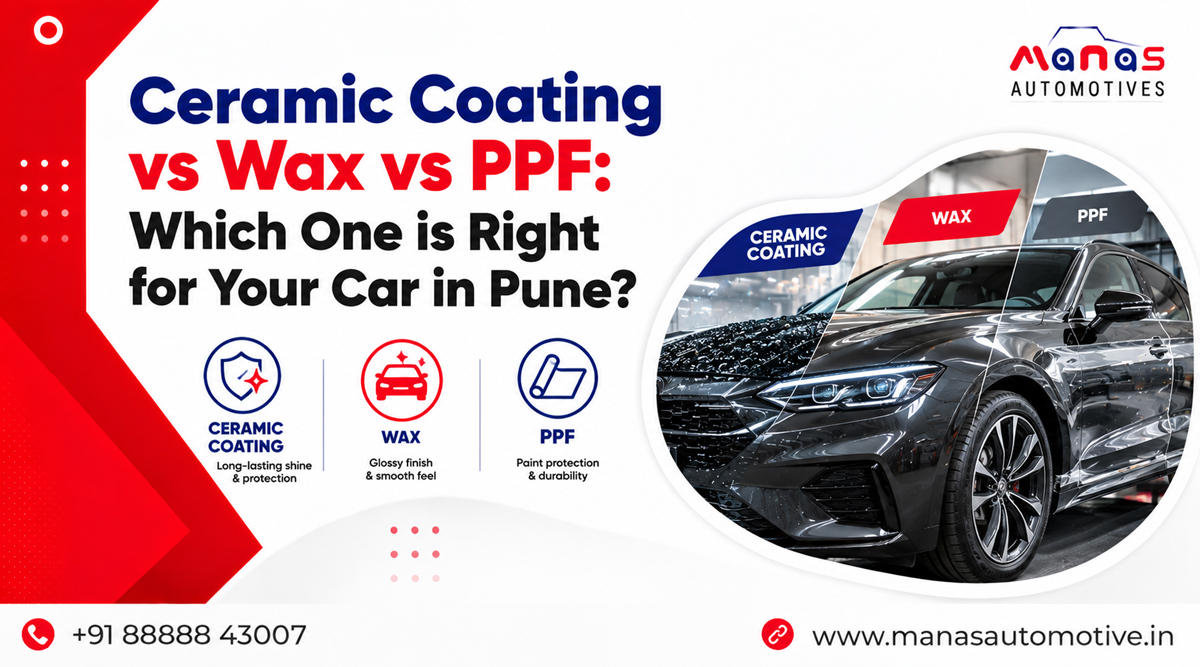
If you want to keep your car looking newer for longer, you may have come across three popular paint-protection options: car wax, ceramic coating and Paint Protection Film (PPF).But these products are not simply different versions of the same protection.
Wax provides basic, short-term surface protection and shine. Ceramic coating provides a more durable protective surface that can improve gloss, water repellency and resistance to certain contaminants. PPF provides a physical layer designed to protect covered paintwork from stone chips, road debris and minor abrasions.
So, when comparing ceramic coating vs wax vs PPF, the right choice depends on what you want to protect your car from, how you use it and how much maintenance you are comfortable with.
Ceramic Coating vs Wax vs PPF: What’s the Difference?
The simplest way to understand the three options is to look at the type of protection they provide.
| Feature | Car Wax | Ceramic Coating | PPF |
|---|---|---|---|
| Main purpose | Shine and basic surface protection | Surface protection, gloss and easier maintenance | Physical paint protection |
| Water repellency | Yes | Strong | Depends on film/topcoat |
| UV/environmental protection | Limited | Yes, depending on product | Depends on film |
| Stone-chip protection | No | No | Yes, on covered areas |
| Scratch/abrasion protection | Very limited | Limited | Better physical protection |
| Gloss enhancement | Yes | Yes | Depends on film and finish |
| Maintenance | Frequent reapplication | Regular washing and care | Regular cleaning and care |
| Coverage | Usually full exterior | Usually painted exterior surfaces | Only the panels where film is installed |
| Best suited for | Affordable short-term protection | Long-term surface protection and easier maintenance | Impact-prone areas and physical protection |
The exact performance depends on the product, preparation, installation and maintenance. In particular, ceramic coating should not be treated as a substitute for PPF when the main concern is stone-chip or impact damage. PPF is specifically designed as a physical film barrier, while ceramic coating is a surface coating.
What Is Car Wax and How Does It Protect Your Car?
Car wax is a relatively simple way to improve your vehicle’s appearance while adding a temporary protective layer over the paint.
It can provide:
- Improved gloss and shine
- Water beading
- Basic protection from everyday environmental contaminants
- A relatively affordable way to refresh the appearance of the paint
However, wax is not designed to protect against significant physical damage.
Wax will not reliably protect your car from stone chips, deep scratches or parking damage. It also requires regular reapplication because the protective layer gradually wears away.
Who should consider car wax?
Wax can make sense if you:
- Want an affordable paint-care option
- Enjoy maintaining your car regularly
- Mainly want improved shine and water beading
- Do not want to invest in a longer-term coating or film
If your priority is physical protection from road debris, however, wax is not the appropriate solution.
What Is Ceramic Coating for Cars?
Ceramic coating is a liquid protective coating applied to a properly prepared vehicle surface. Once cured, it creates a durable layer over the paint.
One of its most noticeable characteristics is its hydrophobic behaviour, which can cause water to bead and makes routine washing easier.
Depending on the product, ceramic coating can also provide resistance against certain environmental contaminants and help maintain the vehicle’s gloss. However, its performance depends heavily on the product used, surface preparation and aftercare.
Benefits of Ceramic Coating for Your Car
A quality ceramic coating can offer:
- Enhanced gloss and appearance
- Strong water repellency
- Easier removal of dirt and some contaminants
- Additional resistance against environmental contaminants
- Longer-lasting protection than traditional wax
- A smoother-feeling surface
What Ceramic Coating Does Not Protect Against
One of the most important things to understand is that ceramic coating is not an invisible shield against all scratches and impacts.
It does not reliably prevent:
- Stone chips
- Deep scratches
- Major parking damage
- Collision damage
- Physical impact from road debris
A ceramic coating can help protect the surface, but it cannot replace a physical protection film when impact protection is the priority.
What Is PPF for Cars?
PPF stands for Paint Protection Film. Unlike wax and ceramic coating, PPF is a physical film installed over the vehicle’s painted surfaces. Its main purpose is to absorb or resist the effects of stone chips, road debris, minor abrasions and other physical wear before they reach the underlying paint. PPF can be installed on selected high-impact areas rather than necessarily covering the entire vehicle.
Common areas include:
- Front bumper
- Bonnet
- Front fenders
- Side mirrors
- Door edges
- Other areas exposed to road debris
Some PPF products also feature self-healing properties for certain light surface marks, but performance varies by film.
What Does PPF Protect Your Car From?
PPF does not make a vehicle completely damage-proof. A severe impact can still damage the film and potentially the underlying panel. Also, areas without PPF remain exposed. That is why selecting the right coverage area is important.
How Do Wax, Ceramic Coating and PPF Handle Pune Driving Conditions?
Pune car owners can encounter a mixture of strong sunlight, dust, rain, traffic, road debris and frequent urban driving. But different types of protection address different problems.
Sun and Outdoor Parking
Regular exposure to sunlight can affect a vehicle’s exterior finish over time. Ceramic coatings and some PPF products are designed with UV/environmental resistance in mind, while wax provides a more temporary layer of protection. Regardless of the protection product, sensible parking and regular vehicle care remain important. Paint protection should complement good maintenance rather than replace it.
Dust, Rain and Everyday Grime
Dust and road grime can accumulate quickly on a daily-driven vehicle. A hydrophobic ceramic coating can make water and some contaminants easier to remove during washing. Wax can also provide water beading, although it generally requires more frequent reapplication. Neither product means that you can stop washing the car. Regular, gentle washing remains important for maintaining the vehicle’s finish.
Bird Droppings, Tree Sap and Other Contaminants
Environmental contaminants should be removed reasonably quickly rather than being left on the paint for extended periods. Ceramic coatings can provide additional chemical resistance depending on the product, but they are not a reason to ignore contamination.
The best protection is still a combination of suitable paint protection and proper maintenance.
Highway Driving and Road Debris
This is where PPF has a significant advantage. If you frequently drive on highways or expressways, the front of your car can be exposed to stones and other road debris. For this type of risk, a physical film such as PPF is more relevant than wax or ceramic coating. That is because PPF is specifically designed to provide a physical barrier between the road debris and the painted surface.
Ceramic Coating vs Wax vs PPF for Pune Driving Conditions
There isn’t one option that is right for every car.
Your decision should depend on what you want to protect against, your budget, how you use your car and how much maintenance you prefer.
Choose Wax If You Want:
- A more affordable option
- Temporary protection
- Improved shine
- Better water beading
- A simple maintenance routine
Wax is suitable when appearance and short-term surface protection are your main priorities.
Consider Ceramic Coating If You Want:
- Longer-lasting surface protection than wax
- Improved gloss
- Strong water repellency
- Easier routine cleaning
- Additional resistance against environmental contaminants
Ceramic coating can be particularly appealing if you want to spend less time dealing with frequent reapplication while maintaining the appearance of your car.
Consider PPF If You Want:
- Physical protection against stone chips
- Protection against road debris
- Additional protection for vulnerable painted panels
- Protection for a new or valuable vehicle
- More protection during frequent highway driving
PPF is particularly relevant when preventing physical paint damage is your main concern.
Can You Combine PPF and Ceramic Coating?
Yes, depending on the products and installation system, it can be possible to use both. A common approach is to use PPF on high-impact areas and a suitable coating on other painted surfaces. For example, a car owner might choose PPF for areas such as the front bumper and bonnet while using ceramic coating on other exterior painted surfaces. This approach combines two different types of protection:
PPF → physical impact protection
Ceramic coating → surface protection, gloss and easier maintenance
However, compatibility and application order matter. Always ask the installer which products are being used and whether the coating is approved for application over the specific PPF. Some manufacturers have specific preparation and application requirements.
Do You Need Paint Protection on a New Car?
Not necessarily — but a new car is often a good time to think about paint protection. Starting with clean, properly prepared paint can make the protection process easier.
Before choosing a treatment, consider:
- How long you plan to keep the car
- Whether the car is parked indoors or outdoors
- How frequently you drive
- Whether you regularly use highways
- How important maintaining the exterior appearance is to you
- How much maintenance you are comfortable doing
- Whether you are more concerned about environmental contamination or physical damage
A new car does not automatically require PPF or ceramic coating. The right choice depends on how you use and maintain it.
How to Choose the Right Paint Protection for Your Car
Before spending money on any paint-protection treatment, ask these five questions:
1. What type of damage concerns you most?
If it is mainly dirt, water and environmental contamination, ceramic coating may be worth considering. If it is stone chips and physical road damage, PPF is more relevant.
2. How often do you drive on highways?
Frequent highway driving can increase exposure to road debris, making PPF on vulnerable areas worth considering.
3. How often are you willing to maintain the car?
Wax requires more frequent attention, while ceramic coating can reduce some of the effort involved in routine cleaning.
4. How much of the car do you want to protect?
PPF protects the areas where it is installed. You can choose selected panels or broader coverage depending on your requirements.
5. What is the condition of your paint?
Before applying any coating or film, inspect the existing paint.
Existing scratches, swirl marks, stains or other imperfections may need appropriate preparation before protection is applied.
Frequently Asked Questions
Is ceramic coating better than wax?
Ceramic coating generally provides longer-lasting surface protection and stronger water-repellent properties than traditional wax, but it costs more and requires proper preparation and application. Wax remains a simpler option for short-term shine and protection.
Is ceramic coating better than PPF?
They are designed for different purposes. Ceramic coating primarily provides surface protection, gloss and water repellency, while PPF provides a physical barrier against stone chips and other forms of physical wear. Neither is universally better.
Does ceramic coating protect against stone chips?
No. Ceramic coating is not designed to absorb stone-chip impacts. PPF is the more appropriate option when physical impact protection is the priority.
Does PPF prevent all scratches?
No. PPF can provide significant protection against certain scratches, chips and abrasions, but it cannot make a vehicle completely scratch-proof. Severe impacts can still damage the film and the panel underneath.
Is PPF only for luxury cars?
No. PPF can be used on any vehicle where the owner wants additional physical protection for selected painted areas. Whether it makes financial sense depends on the vehicle, driving conditions, coverage required and budget.
Can ceramic coating be applied over PPF?
Some ceramic coatings are designed to be compatible with PPF, but compatibility depends on the specific products. Always confirm the manufacturer’s recommendations before applying a coating over PPF.
Do I still need to wash a ceramic-coated car?
Yes. Ceramic coating does not make a car self-cleaning. Regular washing is still necessary to remove dust, road grime and environmental contaminants.
How long does ceramic coating last?
There is no single lifespan that applies to every ceramic coating. Durability depends on the product, preparation, application, environmental exposure and maintenance. Always check the manufacturer’s stated performance and maintenance requirements.
Get Professional Car Detailing Advice in Pune
Choosing between wax, ceramic coating and PPF should start with the condition of your car and the type of protection you actually need. If you are unsure which treatment is appropriate, a professional inspection can help you understand the current condition of your paint and the available options.
Manas Automotive provides car detailing services in Karve Nagar, Pune. Contact the team to discuss your vehicle’s exterior care and confirm which paint-protection or detailing treatments are currently available. The right treatment depends on your vehicle, driving habits, paint condition and maintenance requirements.
Manas Automotive
Karve Nagar, Pune – 411052
Call: +91 88888 43007 / +91 89838 43007
Contact Manas Automotive for your car detailing and paint-care requirements.