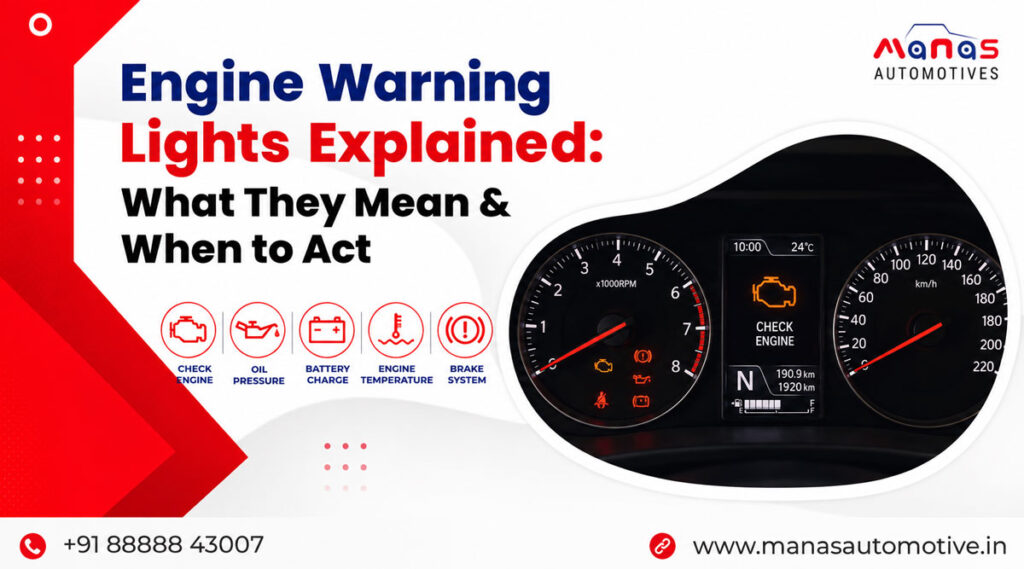
Modern vehicles are equipped with advanced sensors that constantly monitor the health of the engine, braking system, electrical components, emissions, and several other critical systems. When one of these systems detects an issue, a warning light appears on the dashboard to alert the driver before the problem becomes more serious. Many car owners make the mistake of ignoring these warning lights, especially if the vehicle still seems to drive normally. Unfortunately, a small issue such as low engine oil, a weak battery, or a faulty sensor can quickly develop into an expensive repair if left unattended. On the other hand, some warning lights indicate serious safety concerns that require you to stop driving immediately.
Understanding what these dashboard symbols mean doesn’t require you to be a mechanic, but knowing which lights require immediate attention can help you make informed decisions and avoid unnecessary breakdowns. Whether you’re looking for car diagnostics in Pune, car service in Pune, or an Authorized Maruti Suzuki Service Centre in Pune, this guide explains the most common engine warning lights, what causes them, and the steps you should take when they appear.
Why Do Dashboard Warning Lights Matter?
Dashboard warning lights are part of your vehicle’s onboard diagnostic system. Their purpose is not simply to indicate that something has already failed, but to warn you that a component or system isn’t operating as expected.
Think of these warning lights as an early warning system. They allow technicians to diagnose issues before they become major mechanical failures.
For example:
- A battery warning light may indicate that the alternator isn’t charging properly.
- A check engine light could point to something as simple as a loose fuel cap or as serious as an engine misfire.
- An oil pressure warning could indicate insufficient engine lubrication, which can lead to severe engine damage if ignored.
Early diagnosis is almost always less expensive than repairing a major breakdown.
Understanding Dashboard Warning Light Colours
Not every warning light carries the same level of urgency. Most vehicles use three colours to indicate how serious a problem is.
Green or Blue
These lights simply indicate that a system is operating normally.
Examples include:
- Headlights
- High beam
- Cruise control
- Turn indicators
These do not require attention.
Yellow or Amber
Amber warning lights indicate that the vehicle requires inspection soon. Although you can usually continue driving, you should arrange professional diagnostics without unnecessary delay.
Examples include:
- Check Engine Light
- ABS Warning
- TPMS Warning
- Engine Management Warning
Ignoring these warnings may lead to more expensive repairs.
Red
Red warning lights indicate a serious problem affecting safety or engine health. In many cases, you should stop driving as soon as it is safe to do so.
Examples include:
- Oil Pressure Warning
- Brake Warning
- Coolant Temperature Warning
- Charging System Failure
Quick Reference Guide
| Warning Light | What It Means | Can You Continue Driving? |
|---|---|---|
| Check Engine | Engine or emissions fault | Yes, but inspect soon |
| Oil Pressure | Low oil pressure | No, stop safely |
| Battery | Charging system issue | Limited driving only |
| Coolant Temperature | Engine overheating | Stop immediately |
| Brake Warning | Brake system problem | Stop if braking is affected |
| ABS | Anti-lock braking issue | Drive carefully and inspect soon |
| Airbag | Airbag system fault | Service soon |
| TPMS | Low tyre pressure | Check tyres immediately |
1. Check Engine Light
The Check Engine Light is one of the most recognised dashboard warnings, yet it is also one of the most misunderstood.
Many drivers assume it automatically means the engine is about to fail. In reality, this light simply indicates that the engine management system has detected an abnormal reading from one or more sensors.
Common causes include:
- Loose fuel cap
- Faulty oxygen sensor
- Spark plug problems
- Ignition coil failure
- Engine misfire
- Fuel injector issues
- Catalytic converter problems
- Sensor faults
Sometimes the light remains steady, while in more serious situations it flashes continuously. A flashing Check Engine Light usually indicates a severe engine misfire that can damage the catalytic converter. In this situation, continued driving is not recommended. Professional engine diagnostics in Pune can quickly identify the fault using specialised diagnostic equipment rather than relying on guesswork.
2. Oil Pressure Warning Light
The oil pressure warning light is one of the few dashboard warnings that should never be ignored. Your engine depends on pressurized oil to lubricate moving components. Without adequate oil pressure, internal engine parts begin wearing rapidly.
Common causes include:
- Low engine oil level
- Oil pump failure
- Blocked oil passages
- Faulty oil pressure sensor
- Internal engine wear
If this warning appears while driving:
- Pull over safely.
- Switch off the engine.
- Check the engine oil level.
- Do not continue driving if the warning remains.
Driving with insufficient oil pressure can result in catastrophic engine damage within a short period.
3. Battery Warning Light
Many people believe the battery warning light means the battery itself has failed. In reality, this light usually indicates that the charging system is not functioning correctly.
Possible causes include:
- Faulty alternator
- Loose drive belt
- Weak battery
- Damaged wiring
- Charging circuit problems
Your vehicle may continue running for a short period using battery power alone. However, once the battery is discharged, the engine may stall and fail to restart. If this warning appears, reduce unnecessary electrical loads such as air conditioning and audio systems, then arrange for the charging system to be inspected as soon as possible.
4. Engine Coolant Temperature Warning
This warning light indicates that your engine is operating above its normal temperature. Overheating is one of the quickest ways to cause serious engine damage.
Possible causes include:
- Low coolant level
- Radiator leaks
- Faulty thermostat
- Cooling fan failure
- Water pump problems
If the temperature warning appears:
- Turn off the air conditioner.
- Pull over safely.
- Switch off the engine.
- Allow the engine to cool completely.
- Never remove the radiator cap while the engine is hot.
Many cases of engine overheating can be prevented through regular preventive car maintenance and coolant inspections.
5. Brake Warning Light
Your braking system is one of the most important safety features in your vehicle.
A brake warning light may indicate:
- Low brake fluid
- Worn brake pads
- Hydraulic system fault
- Parking brake engaged
- Brake pressure problem
If braking performance changes noticeably or the pedal feels soft, stop driving and have the braking system inspected immediately. During routine car servicing in Pune, technicians inspect brake pads, discs, brake fluid, and hydraulic components to ensure the braking system remains safe.
6. ABS Warning Light
The Anti-lock Braking System (ABS) prevents wheel lock during emergency braking. If the ABS warning light comes on, your normal braking system may still function, but the anti-lock feature may be disabled.
Common causes include:
- Faulty wheel speed sensor
- Damaged ABS wiring
- ABS module malfunction
- Low brake fluid
- Electrical faults
Although the vehicle can usually be driven carefully, professional diagnosis should not be delayed. Driving without ABS may reduce braking stability on wet roads, especially during the monsoon.
7. Airbag Warning Light
The airbag warning light is easy to overlook because it doesn’t affect how your car drives. However, it indicates a fault in one of your vehicle’s most important safety systems. When this warning light remains illuminated after starting the engine, it usually means the Supplemental Restraint System (SRS) has detected a problem. This could prevent the airbags from deploying correctly during an accident or, in rare cases, cause them to deploy unexpectedly.
Common causes include:
- Faulty crash sensors
- Damaged seat belt pretensioners
- Loose wiring beneath the seats
- Low battery voltage
- Airbag control module faults
Unlike some dashboard warnings, there are no visible symptoms besides the warning light itself. This is why it’s important not to ignore it simply because the vehicle appears to drive normally. Professional diagnostics can identify the exact fault and ensure your vehicle’s safety systems remain fully operational.
8. Tyre Pressure Monitoring System (TPMS) Warning Light
The TPMS warning light alerts you when one or more tyres are operating below the recommended pressure. Driving with incorrect tyre pressure doesn’t just affect fuel efficiency. It also reduces braking performance, increases tyre wear, and can make the vehicle less stable, especially on wet roads.
Common reasons for the TPMS warning include:
- Low tyre pressure
- Sudden temperature changes
- Slow punctures
- Damaged TPMS sensor
- Tyre replacement without sensor recalibration
The first step is to check the pressure in all tyres, including the spare if your vehicle uses a TPMS sensor there. Inflate them to the manufacturer’s recommended pressure before assuming there’s a fault with the system. Maintaining the correct tyre pressure is one of the simplest yet most effective car maintenance tips for improving safety, tyre life, and fuel economy.
9. Power Steering Warning Light
Modern vehicles use either electric power steering or hydraulic power steering to make steering smoother and easier. If the steering warning light appears, you may notice the steering wheel becoming heavier than usual, especially at lower speeds.
Possible causes include:
- Low power steering fluid (hydraulic systems)
- Electric steering motor faults
- Steering angle sensor issues
- Electrical problems
- Damaged steering components
Although the vehicle may still be controllable, driving with reduced steering assistance requires greater effort and may become unsafe in emergency situations. If steering suddenly becomes unusually heavy, schedule a professional inspection without delay.
10. Diesel Particulate Filter (DPF) Warning Light (Diesel Vehicles)
If you own a diesel vehicle, you may notice a Diesel Particulate Filter (DPF) warning light. The DPF captures soot produced during combustion to reduce emissions. Over time, the filter fills with soot and requires a regeneration process to burn off these deposits.
The warning light may appear because:
- The filter is becoming blocked.
- The vehicle is frequently driven over short distances.
- Regeneration has not completed successfully.
- There is a fault within the emissions system.
In many cases, a longer drive at a steady highway speed allows the regeneration process to complete naturally. However, if the warning remains illuminated, professional diagnostics are recommended. Ignoring the DPF warning for extended periods may eventually require filter cleaning or replacement.
What Should You Do When a Warning Light Appears?
Seeing a warning light doesn’t always mean you should panic. However, ignoring it is rarely the right decision.
A practical approach is to:
- Stay calm and observe the colour of the warning light.
- Check whether the vehicle is behaving normally.
- Refer to the owner’s manual if you’re unsure about the symbol.
- If it’s a red warning light, stop driving as soon as it’s safe.
- If it’s an amber warning light, arrange an inspection at the earliest opportunity.
- Never attempt to clear warning lights without diagnosing the underlying issue.
Many warning lights are triggered by sensors that detect small problems long before they become noticeable while driving. Addressing these issues early often prevents expensive repairs.
When Should You Stop Driving Immediately?
Some dashboard warning lights indicate serious faults that require immediate attention.
Stop driving safely if you notice:
- Oil Pressure Warning Light
- Engine Coolant Temperature Warning
- Brake Warning Light accompanied by poor braking
- Severe engine knocking
- Excessive smoke from the engine
- Sudden loss of steering assistance
- Rapid loss of engine power
Continuing to drive under these conditions may cause severe engine damage or compromise your safety. If you’re unsure whether it’s safe to continue driving, it’s always better to seek professional assistance than risk further damage.
Why Professional Car Diagnostics Matter
Modern vehicles rely on dozens of electronic control units and sensors that communicate continuously with one another. Although dashboard warning lights indicate that something requires attention, they don’t always identify the exact cause.
For example, a Check Engine Light may be triggered by something as simple as a loose fuel cap or something more complex such as an ignition fault, fuel injector issue, or sensor malfunction. Without proper diagnostic equipment, it’s impossible to know the exact reason.
Professional car diagnostics use manufacturer-approved scan tools to read fault codes, analyze live vehicle data, and identify the root cause instead of simply replacing parts based on guesswork.
This approach offers several advantages:
- Faster fault identification
- Accurate repairs
- Reduced repair costs
- Prevention of unnecessary part replacement
- Improved vehicle reliability
Routine diagnostics also help identify hidden issues during scheduled servicing before they develop into larger mechanical failures.
Why Choose MANAS Automotive?
Dashboard warning lights should never be ignored, but they also shouldn’t lead to unnecessary repairs based on assumptions. Accurate diagnosis is the first step toward resolving any issue efficiently. As an Authorized Maruti Suzuki Service Centre in Pune, MANAS Automotive provides professional vehicle diagnostics using advanced diagnostic equipment and manufacturer-recommended service procedures. Every inspection is carried out by trained technicians who understand the electronic systems used in Maruti Suzuki vehicles.
Services include:
- Engine diagnostics
- Dashboard warning light diagnosis
- Periodic servicing
- Brake inspection and repair
- Battery testing
- Wheel alignment and balancing
- Car AC servicing
- Suspension inspection
- Genuine Maruti Suzuki spare parts
- Preventive maintenance
Whether you’ve noticed a Check Engine Light, ABS warning, battery warning, or another dashboard symbol, early diagnosis helps protect your vehicle, reduce repair costs, and improve long-term reliability.
Frequently Asked Questions
1. What does the Check Engine Light mean?
The Check Engine Light indicates that the engine management system has detected a fault. The issue may range from a loose fuel cap to a more serious engine or emissions problem. A professional diagnostic scan is the best way to identify the exact cause.
2. Is it safe to drive with the Check Engine Light on?
If the light is steady and the vehicle is driving normally, you can usually continue driving for a short period while arranging an inspection. However, if the light is flashing, you should stop driving as soon as it is safe because it may indicate a severe engine misfire.
3. What should I do if the oil pressure warning light comes on?
Pull over safely, switch off the engine, and check the engine oil level. Do not continue driving if the warning remains on, as low oil pressure can cause severe engine damage.
4. Why is my battery warning light illuminated?
The battery warning light usually indicates a charging system issue rather than a faulty battery. Common causes include a failing alternator, loose drive belt, damaged wiring, or battery problems.
5. Can I drive with the ABS warning light on?
In most cases, your normal braking system will still function, but the anti-lock braking feature may be disabled. The vehicle should be inspected as soon as possible, especially before driving in wet conditions.
6. What causes the engine temperature warning light?
The warning usually indicates that the engine is overheating due to low coolant, radiator problems, cooling fan failure, thermostat issues, or water pump faults.
7. Why is my TPMS warning light on?
The Tyre Pressure Monitoring System (TPMS) warning usually indicates low tyre pressure. It may also be caused by a puncture, temperature changes, or a faulty TPMS sensor.
8. Should I ignore an airbag warning light?
No. An airbag warning light indicates a fault within the Supplemental Restraint System. Although the vehicle may drive normally, the airbags may not function correctly during a collision.
9. How often should I have car diagnostics performed?
Vehicle diagnostics are recommended whenever a dashboard warning light appears, during scheduled servicing, before long trips, or if you notice unusual vehicle behaviour such as poor performance or reduced fuel efficiency.
10. Where can I get professional engine diagnostics in Pune?
MANAS Automotive is an Authorised Maruti Suzuki Service Centre in Pune, providing professional engine diagnostics, dashboard warning light inspections, periodic servicing, brake repairs, battery testing, and preventive maintenance using manufacturer-approved diagnostic equipment.