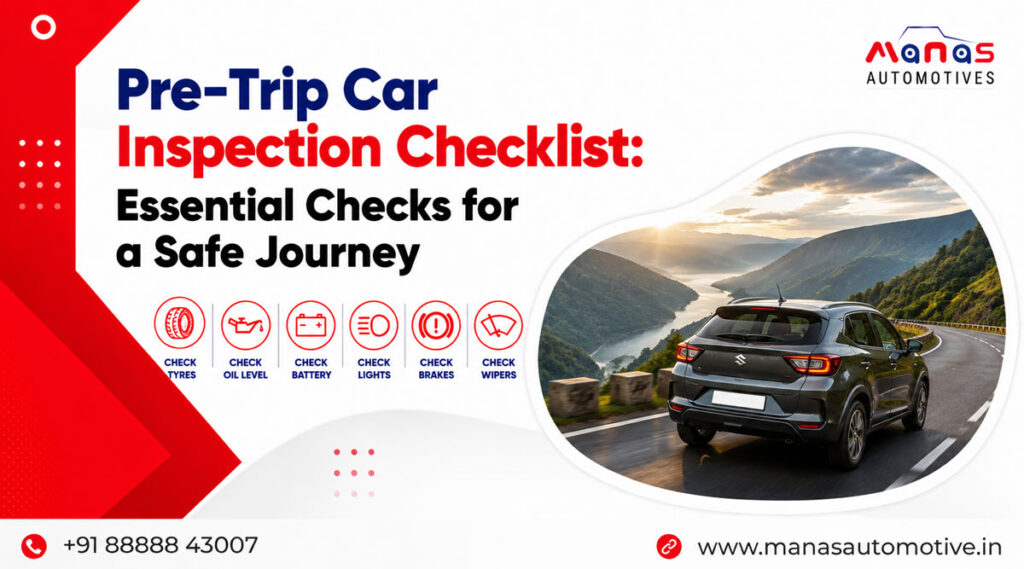
Planning a road trip? Before packing your bags and starting the journey, following a proper pre-trip car inspection checklist can help you identify potential vehicle problems before they interrupt your drive.
A thorough car inspection before a long drive should cover tyres, engine oil, coolant, brakes, battery, lights, AC, wipers and other essential systems. Whether you’re travelling for a weekend getaway, family holiday or business trip, a few preventive checks can make your journey safer and more comfortable.
Here is a practical long drive car checklist every car owner should follow.
Why Is a Pre-Trip Car Inspection Important?
Long-distance driving puts your vehicle under sustained operating conditions. Highway speeds, changing weather, heavy luggage, hills and continuous AC use can expose problems that may not be noticeable during short city drives.
A pre-trip vehicle inspection can help you:
- Identify potential mechanical problems early
- Reduce the risk of unexpected breakdowns
- Improve driving safety
- Maintain proper tyre performance
- Check essential fluid levels
- Ensure lights and wipers are functioning
- Improve comfort during long journeys
- Prepare your vehicle for highway driving
If your scheduled service is already due, completing it before a long journey is usually preferable to postponing it until after the trip.
Pre-Trip Car Inspection Checklist: 15 Things to Check
1. Check Your Tyre Pressure
Tyres should be one of the first items on your car checklist before a road trip.
Check the pressure when the tyres are cold and compare it with the manufacturer’s recommended specifications. Incorrect pressure can affect handling, tyre wear and fuel efficiency.
Remember that recommended pressure may differ depending on vehicle load.
2. Inspect Tyre Tread and Condition
Look beyond tyre pressure and inspect the physical condition of all tyres.
Check for:
- Excessive tread wear
- Cuts
- Cracks
- Bulges
- Uneven wear
- Embedded objects
- Sidewall damage
If you notice significant damage or excessive wear, have the tyre professionally inspected before travelling.
3. Don’t Forget the Spare Tyre
A spare tyre is useful only when it is ready to use.
Your long drive car checklist should include checking the spare tyre’s pressure and overall condition. Also confirm that the jack, wheel wrench and other tyre-changing equipment are present.
If your vehicle uses a puncture-repair kit instead of a spare tyre, check its condition and expiry date where applicable.
4. Check the Engine Oil
Engine oil plays an essential role in lubricating and protecting your engine.
Before a long journey, check the engine oil level according to your owner’s manual. If an oil change is approaching its scheduled interval, consider completing the required service before your trip.
Never use an oil grade simply because another vehicle uses it. Follow your manufacturer’s specifications.
5. Check the Engine Coolant
Engine overheating can quickly turn a road trip into a stressful situation.
Check the coolant level when the engine is cool and inspect for signs of leakage around the cooling system.
Important: Never open a pressurised radiator or coolant cap while the engine is hot.
If your vehicle has recently shown signs of overheating or unexplained coolant loss, get it inspected before undertaking a long journey.
6. Inspect the Brakes
Reliable braking performance is critical, particularly on highways, mountain roads and during heavy traffic.
Pay attention to warning signs such as:
- Squeaking or grinding noises
- Brake pedal vibration
- Reduced braking performance
- Unusual pedal feel
- Brake warning lights
If you experience any of these symptoms, have the braking system inspected before travelling.
7. Test the Car Battery
A weak battery can cause starting problems, particularly after extended stops during a trip.
Your pre-trip car inspection checklist should include checking for visible terminal corrosion and signs of weak battery performance.
Slow engine cranking, electrical irregularities or repeated starting problems are good reasons to arrange a professional battery and charging-system test.
Your vehicle relies on several fluids for safe and efficient operation.
Depending on the vehicle, check:
- Engine oil
- Coolant
- Brake fluid
- Windshield washer fluid
- Transmission fluid
- Power-steering fluid, where applicable
Modern vehicles differ significantly, so always refer to the owner’s manual for the correct fluids and inspection procedures.
9. Test the Headlights and Other Lights
Good visibility and communication with other road users become even more important during night driving, rain or poor weather.
Test your:
- Headlights
- High beams
- Tail lights
- Brake lights
- Indicators
- Hazard lights
- Reverse lights
- Fog lights, if equipped
Replace faulty bulbs or address electrical issues before your journey.
10. Check Windshield Wipers and Washer Fluid
Rain, dust, mud and insects can quickly reduce windshield visibility on a long drive.
Check whether your wiper blades clear the glass properly without leaving heavy streaks. Make sure the washer reservoir contains sufficient fluid and the spray nozzles work correctly.
This is particularly important for a pre-monsoon or monsoon road trip car inspection.
11. Test the Car AC
A properly functioning AC system can make a significant difference during long-distance driving.
Before leaving, test whether the AC:
- Cools effectively
- Maintains consistent airflow
- Operates without unusual noises
- Produces no unpleasant odour
- Clears windshield fog effectively
If cooling is weak or inconsistent, consider an AC inspection before the trip rather than waiting for the system to fail on the road.
12. Check Wheel Alignment and Balancing
Does your steering wheel vibrate at higher speeds? Does the vehicle pull toward one side?
These symptoms can indicate wheel alignment, wheel balancing, tyre or suspension issues.
Since highway driving involves sustained higher speeds, unusual steering or vibration should be professionally diagnosed before a long journey.
13. Inspect the Suspension
The suspension affects vehicle stability, handling and comfort.
Watch for:
- Knocking noises over bumps
- Excessive bouncing
- Vehicle leaning
- Unusual steering behaviour
- Uneven tyre wear
These symptoms don’t always mean the same component has failed, so professional inspection is preferable to guessing which part needs replacement.
14. Check Dashboard Warning Lights
When you start your car, observe the instrument cluster.
Warning lights relating to the engine, brakes, ABS, battery, oil pressure, temperature or other systems should not simply be ignored before a road trip.
Some warnings indicate issues requiring immediate attention, while others may allow limited driving. Refer to your owner’s manual and seek professional diagnosis when necessary.
15. Check Whether Your Scheduled Car Service Is Due
Before planning a long drive, check your vehicle’s service history.
If your car service is due based on the manufacturer’s recommended time or mileage interval, getting the vehicle serviced before the trip can help identify maintenance requirements and potential problems.
A professional car service before a long drive may include inspection of tyres, brakes, fluids, filters, battery, lights, suspension and other vehicle-specific components.
Quick Car Checklist Before a Road Trip
Before leaving home, do one final walk-around.
Essential Checks Before Starting Your Long Drive
Make sure you have checked:
- Tyre pressure and tread
- Spare tyre or puncture kit
- Engine oil
- Coolant
- Brake condition
- Battery
- Essential fluids
- Headlights and indicators
- Wipers and washer fluid
- AC performance
- Dashboard warning lights
- Wheel alignment symptoms
- Suspension symptoms
- Scheduled service status
Keep your vehicle documents and essential emergency equipment accessible as well.
What Should You Keep in Your Car for a Long Drive?
Vehicle inspection is only one part of road-trip preparation.
Consider carrying essentials such as drinking water, a first-aid kit, phone charging equipment, flashlight, basic emergency supplies and the tyre-changing or puncture-repair equipment provided for your vehicle.
For unfamiliar routes, plan fuel or charging stops in advance, particularly when travelling through areas with limited facilities.
When Should You Get Your Car Professionally Inspected Before a Road Trip?
Not every trip requires an additional workshop visit. However, professional inspection is sensible if:
- Your scheduled service is due
- You are planning a particularly long journey
- Your vehicle has not been serviced for an extended period
- A dashboard warning light is active
- The brakes feel unusual
- The vehicle is overheating
- You notice fluid leaks
- Tyres show abnormal wear
- The steering wheel vibrates
- The car pulls to one side
- The AC isn’t cooling properly
- The battery has recently shown starting problems
- You hear unusual engine or suspension noises
Addressing these symptoms before departure can help reduce the likelihood of problems during your journey.
Car Maintenance Before a Road Trip During Monsoon
For drivers in Pune and other regions experiencing heavy monsoon conditions, additional preparation can be valuable.
Check tyre tread carefully, make sure the wipers work effectively and ensure all exterior lights are functioning. Good tyre condition becomes particularly important on wet roads.
Avoid driving through deeply flooded roads when the water depth is uncertain. Water entering sensitive vehicle components can result in serious damage.
Car Service Before a Long Drive in Pune
If you’re preparing for an upcoming road trip, a professional vehicle inspection can provide additional confidence before departure.
Manas Automotive in Karve Nagar, Pune, is a Maruti Suzuki Authorised Service Station providing periodic maintenance and vehicle-care services.
Depending on your vehicle’s requirements, services can include periodic maintenance, AC servicing, battery testing and replacement, wheel alignment and balancing, cleaning and other workshop support. If your scheduled service is due or you’ve noticed unusual vehicle behaviour, getting the issue inspected before your journey is preferable to discovering it hundreds of kilometres away from home.
Final Thoughts
A proper pre-trip car inspection checklist doesn’t have to be complicated. Start with the components that directly affect reliability, visibility and safety—tyres, brakes, fluids, battery, lights, wipers and essential vehicle systems. Your vehicle’s owner’s manual and manufacturer-recommended maintenance schedule should always be your primary references.
A little car maintenance before a road trip can go a long way toward making your journey safer, smoother and more enjoyable.
FAQs About Pre-Trip Car Inspection
1. What should I check in my car before a long drive?
Before a long drive, check tyre pressure and condition, engine oil, coolant, brakes, battery, essential fluids, lights, wipers, AC and dashboard warning lights. Also check whether your scheduled vehicle service is due.
2. Should I get my car serviced before a long road trip?
If your scheduled service is approaching or already due, completing it before the trip is sensible. You should also arrange an inspection if you notice unusual noises, warning lights, fluid leaks, braking problems, steering vibration or other changes in vehicle behaviour.
3. How many days before a road trip should I inspect my car?
Ideally, perform your main checks several days before departure. This provides time to address any problems you discover rather than trying to arrange repairs immediately before leaving.
4. What fluids should I check before a long drive?
Depending on your vehicle, check engine oil, coolant, brake fluid, windshield washer fluid, transmission fluid and power-steering fluid where applicable. Always follow your vehicle owner’s manual.
5. Should I check tyre pressure before a road trip?
Yes. Tyre pressure is an important part of a pre-trip vehicle inspection. Check the tyres when cold and use the pressure recommended by the vehicle manufacturer, taking vehicle load into account where specified.
6. What are the most important safety checks before highway driving?
Tyres, brakes, lights, steering behaviour, wipers, fluids and dashboard warning indicators are among the most important checks. Any existing mechanical or safety-related symptoms should be professionally inspected before highway travel.
7. What should I do if my check engine light is on before a road trip?
Don’t automatically ignore it. The check engine light can have many causes and varying levels of urgency. Arrange diagnostic inspection before a long journey, particularly if the light is flashing or accompanied by poor engine performance, unusual noises or other warning signs.
8. Where can I get my car checked before a long drive in Pune?
Manas Automotive in Karve Nagar, Pune provides professional vehicle maintenance services as a Maruti Suzuki Authorised Service Station. Drivers can have their vehicle inspected and address maintenance requirements before undertaking a long-distance journey.